

What Is The Average Asteroid Speed?
The velocity of asteroids varies based on their proximity to the sun. Most asteroids are located in the Asteroid Belt, situated between Mars and Jupiter. Owing to this positioning relative to the sun, their average orbital speeds typically range from 17 to 25 kilometers per second, which is approximately 38,029 to 55,925 miles per hour.
The universe is a treasure trove of phenomena, waiting to be explored and understood. From the vast galaxies to the tiny particles, every aspect of space has a story to tell. But among the myriad of celestial objects, asteroids and comets stand out due to their potential impact on Earth and their intriguing nature.
In seeking to comprehend these space travelers, many turn to experts and scholars with the plea, “write my essay,” hoping to unlock the secrets they hold. As we venture into the heart of these cosmic entities, we will examine their origins, their swift journeys, and their potential consequences upon interaction with our planet. Buckle up as we dive into the unknown, answering some of the most burning questions about the universe’s fast-moving wonders.
In this article, we are going to discuss exactly what asteroids are, where they come from, and how fast they travel. So, let’s BLAST OFF!
What Exactly Are Asteroids?
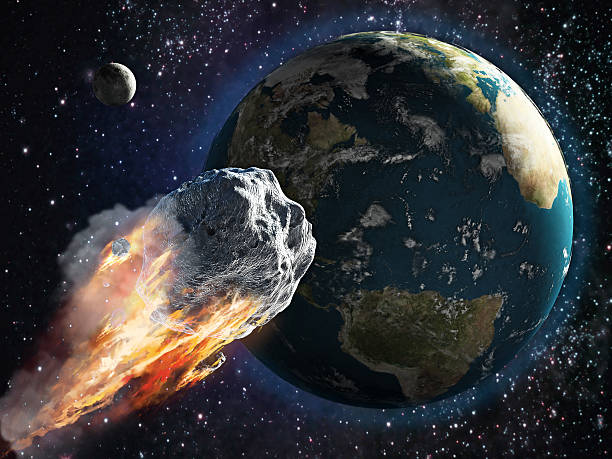
Asteroids are rocky bodies that orbit the Sun, just like planets.
They range in size from tiny specks of dust to huge boulders that are hundreds of miles in diameter.
However, asteroids are smaller than planets. They are also not round, like the planets, but are jagged and irregular in shape instead.
Most asteroids are made from a combination of different types of rock. Some also contain clay, nickel, and iron.
Where Do Asteroids Come From?
Asteroids originated from the remnants of the solar system's formation process. Around 4.6 billion years ago, a large cloud of gas and dust underwent a collapse, leading to the birth of our solar system. The majority of this material gravitated towards the center of the cloud, eventually forming the sun. Meanwhile, other particles of dust that were condensing within the cloud coalesced to form the planets.
Most asteroids dwell in the main asteroid belt between Mars and Jupiter.
However, there are asteroids that live outside the asteroid belt and travel within the orbital path of some of the other planets.
How Were Asteroids Formed?
Asteroids came into existence in the early phases of the solar system's history. The emergence of Jupiter, with its strong gravitational influence, halted the formation of larger planetary bodies in its vicinity. This gravitational disruption led to frequent collisions among smaller celestial bodies in the area, breaking them down into what we now recognize as asteroids.
Asteroids were formed over four and a half billion years ago, at the same time as our solar system.
A cosmic event caused a cloud of dust and gas particles to collide and compress in an epic occurrence.
Most of the matter formed into planets and moons, but some large chunks were not incorporated into these large bodies and instead became smaller entities.
Asteroids are, therefore, the leftover crumbs from the formation of our solar system.
Struggling with the Asteroid Essay?
Get your assignments done by real pros. Save your precious time and boost your marks with ease.

How Many Asteroids Are In The Solar System?
There are thought to be over 822,000 asteroids in our solar system.
The largest object ever discovered was Ceres, a dwarf planet about a quarter of the size of the moon, which is located in the main asteroid belt between Mars and Jupiter.
When Were Asteroids First Discovered?
"The first known asteroid was discovered by Italian astronomer Giuseppe Piazzi on February 19th, 1801. He found it while observing the stars in the night sky through his telescope. It was later named after him: Piazzi’s Comet."
How Fast Do Asteroids Travel In Space?
The average velocity of an asteroid depends on its size. Smaller asteroids move more slowly because they have less mass.
Larger asteroids move faster because they have more mass.
However, on average, Asteroids move through outer space at a speed of 1000 miles per hour.
How Fast Do Asteroids Travel In The Solar System?

Asteroids’ speeds depend on their distance from the sun.
The closer they are, the faster they travel. This is due to the gravitational pull of the sun.
That said, even Earth-crossing asteroids, or NEOs, travel around 25 kilometers per second. That is 50,000 miles per hour!
How Fast Do Asteroids Hit Earth?
* Asteroids are the most common type of impactor on earth, and they crash into the planet at an estimated velocity of 18 km/s.
* Other types, such as the short-period comet impacts less frequently, but they tend to have higher impact velocities which average closer to 30 km/s.
* Meteors enter the earth’s atmosphere at speeds ranging from 11 km/s to 72 km/s.
What Is The Maximum Speed Of An Asteroid?
As asteroids are much smaller than planets, their maximum terminal velocity is also less.
With gravitational pull factored in, the fastest speed of an asteroid on impact with earth would be around 160,000 mph.
What Is The Fastest Object In Space?
The fastest object in space is thought to be the NASA solar probe.
Not only is it the nearest spacecraft to the sun (just 11.6 million miles away), but it is also the fastest man-made object in history, traveling at 244,255 miles per hour!
Did you like our article?
For more help, tap into our pool of professional writers and get expert essay editing services!

How Often Do Asteroids Hit Earth?
Around 17 asteroids hit the earth every single day.
However, most of these go unnoticed as they land in uninhabited areas and are small, so they make little impact.
Each year, around 6100 meteors that are large enough to reach the ground reach earth.
What Is The Minimum Velocity Of A Meteoroid?
The minimum velocity that a meteoroid can be traveling at when it impacts the earth must be equal to the escape velocity of the earth’s atmosphere; otherwise, it will rebound off the earth’s atmosphere like a force field or burn up.
This velocity is 11.2 km/s.
What Are Shooting Stars?

Meteoroids are small fragments that have broken off from asteroids.
The minimum size can be as small as dust, whereas larger meteoroids can be tens of meters across.
The majority of meteoroid material that comes into contact with the earth’s atmosphere is overwhelmed and burns up.
These burning fragments of space rock become visible meteors twinkling in the night sky.
They give off a flash of light as they combust, and this visible light can be seen from the earth.
We sometimes call them shooting stars.
What Is A Meteor Shower?
When thousands of meteors and tiny rock fragments enter the earth’s atmosphere at once, they burn up in a fantastic display that we call a meteor shower or meteor storm.
These meteor showers are usually caused when a comet passes near the earth’s atmosphere and bits of its tail boil and break off.
Bright meteors and visible meteor tails create a streak of light, which is very beautiful.
What Is A Meteorite?
- A meteorite is a piece of space rock that reaches the Earth's surface after passing through our atmosphere.
- Meteorites are much smaller than asteroids.
- Meteorites originate from larger meteoroids.
- Some meteorites can create a meteor crater upon impact.
- Most meteorites are the size of pebbles or boulders.
- The largest meteorite, named Hoba, was discovered in 1920 in Namibia.
- Hoba has a mass of 60,000 kg and measures 2.7 meters in diameter.
- There is no crater surrounding Hoba.
- The absence of a crater suggests Hoba was traveling at a slower-than-average speed.
- The speed of meteoroids can vary widely.
- Hoba's potentially slower speed might be attributed to its flat shape.
How Fast Was The Asteroid That Killed The Dinosaurs Traveling?
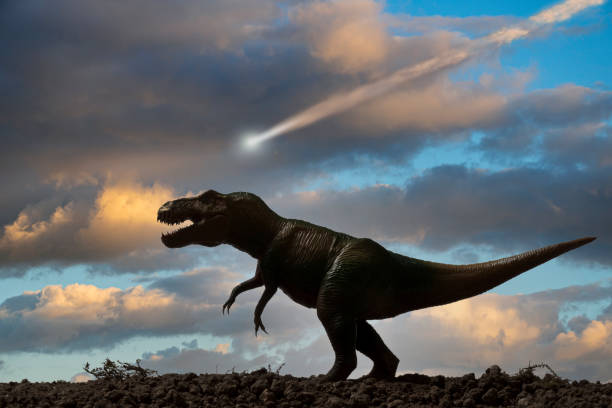
65 million years ago, the Asteroid that killed the dinosaurs was approximately6 miles (9.6 kilometers) wide and produced a crater in Mexico’s Yucatan peninsula that is over 90 miles (145 kilometers) wide.
It is thought to have an entry speed of 30 km/s. That is 150 times faster than a jet airliner. Its impact release more kinetic energy than the atomic bomb.
In fact, it released over a billion times more energy than the atomic bomb that wiped out Hiroshima in Japan.
What Is A Comet?
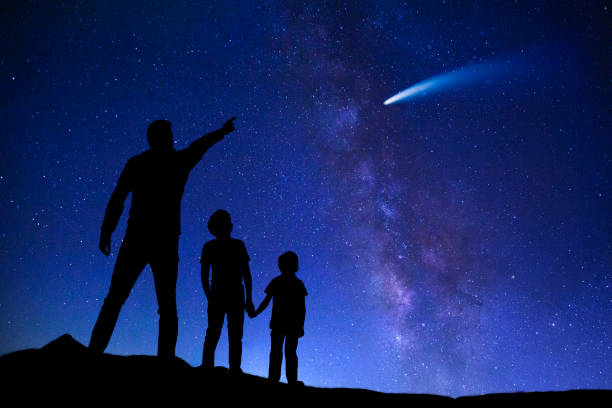
A comet is different from an asteroid in that it usually comes from outside the solar system, and it contains ice and dust rather than rock and metal.
Comets often orbit the sun. When they get near to the sun, its heat causes their icy core to burn up, forming a halo of gas and dust.
This is known as a tail, and it is the trail that happens when this gaseous dust cloud is fanned by solar heat and wind.
How Fast Do Comets Travel?
Comets tend to travel at faster speeds than asteroids.
One of the fastest comets ever recorded was Borisov, which flew by earth at a mind-blowing speed of more than 175 000 kilometers per hour.
How Fast Is Halley’s Comet?
When recorded out by Pluto, Hayley’s comet was moving at a speed of 0.91 kilometers per second (2,000 mph).
However, on February 9, 1986, Halley was only at t perihelion, which is only 0.5871 AU (87.8 million km: 54.6 million miles) from the Sun, well inside the orbit of Venus.
At this point, she was moving at 122,000 mph (54.55 km/s).
Final Thoughts
The average speed of an asteroid depends on its size and its distance from the sun. On average, asteroids impact the earth at a speed of 18 km/s.
This can create a devastating impact if the asteroid is large; however, the risk of asteroids is very low, so you don’t need to start wearing a crash helmet out and about just yet!